Showing posts with label brands. Show all posts

Friday, 11 October 2013

The Progressive Prince


The joke about anyone who broke a window having to report to his grandmother was on the weak side, but Prince William’s decision to host a football match between the two oldest grassroots clubs in the country on the Buckingham Palace lawn to mark the FA’s 150th anniversary was a nice move.

Actually the latest in a series of nice moves. In fact, it’s beginning to seem as though in William we  have a Prince who could be described as progressive. A Prince who feels as though he is part of the future.
It’s not just that he has a Twitter account and a Facebook page , though this helps. It’s because while he still feels like he’s being true to who he is and where he’s come from, he is also beginning to feel like someone of our times (not some crazy bygone times).

Compared to the royal model of old, he’s more human, more open, more self-depreciating. He’s willing to share though also wanting some privacy.  And he’s at least trying to do some good in the world, to contribute to our times.  

Take the move to ask for donations to a handful of selected charities in lieu of wedding gifts. Not ground breaking, but nice, particularly as the selection was far from being a list of the big names and the obvious causes, but felt personal, and thoughtful, and put small charities like Beatbullying on the map.

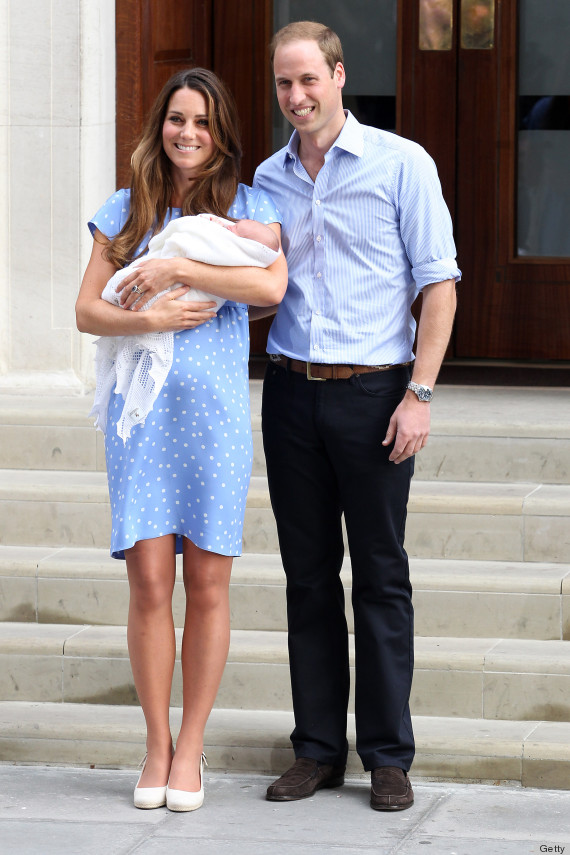
Then there’s the way they managed the whole birth business. They struck the right chord. They gave enough – the photo, the smiles. There was William’s insistence on driving his wife and son home himself – like anyone else – and the willingness to joke about the car seat jitters.  It all felt very natural and totally authentic.  And he didn’t take it too far. It all felt very true to his roots. Tradition certainly wasn’t dispensed with, no doubt to the disappointment of anyone who took a punt on the young Prince being given a contemporary name (you could get odds of 20-1 on Barack!)

We’re not talking about a radical transformation here. The fundamental role of the Royal is the same. Wills hasn’t changed what he does. He’s changed the way in which he does it and how he approaches it.

All this also acts as a nice demonstration of how just how powerful a sense of progressiveness can be. It’s done wonders for the Royal brand. And it was in a real fix. The annus horribilis really wasn’t very long ago. The Royal family felt outdated and outmoded, stale and old. And look at what’s happened now. All of a sudden, everyone wants a part of it. Everyone wants to get as close as they can to it.

And this should give heart to all those businesses and brands out there that feel like they’ve failed to move with the times, and are at risk of being redundant to the modern world. You can turn the ship around. And working to make sure you feel progressive is a great way to do it. Because people want to be connected to something that feels like it’s ready to move ahead. Something that feels like it knows where it’s going and what it wants to be. Something that will be part of the future.

# be progressive

Wednesday, 2 January 2013

Sponsoring sport - the golden goal?

Coca-Cola’s sponsorship of last year’s Olympic Games was a real landmark.

At a time when society is increasingly expecting businesses to demonstrate that they play a positive, responsible role in the world, sponsorship is the ideal moment to do something really impressive and really public, and get the rewards that leadership deserves. 

At London 2012 Coca-Cola did some impressively positive things, judging by any standards. Whether it’s the fact that 73% of drinks consumed at the Games were Coca-Cola’s water, juice or no/low-calorie brands; the fact that 100% of bottles were recyclable and the £15million invested into a new UK recycling plant to handle them; the 1000 young people given the chance to carry the torch as a Future Flame for their community; the investment in the Special Olympics to create sporting opportunities for people with intellectual disabilities; or the hundreds of environmental pledges made by athletes at the in-park sustainability hub created by Coca-Cola (I could go on – read more here), this was a wide-ranging, innovative and really committed demonstration of a company doing the right thing, in a relevant way at the right moment.

WWF-UK CEO David Nussbaum sees it as a new benchmark that other sponsors will be expected to reach,
The work Coca-Cola has undertaken to reduce its impact at the Games, and the lengths to which it has gone to use the power of its brand to engage others and ensure its actions have a lasting impact is to be commended and sets a standard for future corporate sponsors of international events”.

We worked with Coca-Cola to produce London 2012: Our Sustainability Legacy, detailing how the company achieved their most sustainable sponsorship to date in order to inspire and guide others wanting to deliver a truly sustainable event of their own. It provides new best practice models, including one for measuring and managing carbon impacts; another for an innovative, efficient waste recycling system for large events. Last week the final piece of the jigsaw was added when Demos published the results of their review to quantify the social impact of Coca-Cola’s London 2012 sponsorship – see the headlines here.

Models are one thing – there are three in the links above to get you started if you’re responsible for (or sponsor of) a big event.  But they’re not enough. It’s putting it into practice that matters for the brand and for us all. Coca-Cola did it at London 2012. 2013 brings the World Athletics Championship, the African Cup of Nations, the Rugby League World Cup, the Australian Open, as well as the conclusion to the Champions League, Wimbledon and all the other annual sporting highlights. Which of the many corporate sponsors will step up and take gold? It requires commitment and investment but there’s a big prize on offer.

Thursday, 12 April 2012

Think Big, Sustainable Dining, B-Corps and more

Our latest e-bulletin takes a look at some of the latest movers and shakers in responsible business– from Telefónica’s ambitious Think Big programme, unlocking the potential of young people in order to unlock the potential of the business itself; to the new partnership between Harden's Restaurant Guides and the Sustainable Restaurant Association, which will make it easier for diners to choose where they eat based on sustainability as well as cuisine.

We also take a look at the rise of the Benefit Corporation and B-Corps (NB. they're different) in America. Do we really need a new classification for businesses that pursue profit as well as purpose? It’s true that B-Corps like Patagonia are showing real innovation and commitment – you don’t get much bigger than 'Don’t buy our product' as a sustainability message. But Patagonia was an innovative, socially responsible business long before signing up as a B-Corp. Introducing a new legal 'status' for responsible business risks giving the impression that 'normal' businesses aren't expected or able to balance profit with social value.

If you’d like to read the full e-bulletin, get in touch – katie@goodbusiness.co.uk

Friday, 16 March 2012

Reality and Perception

Congratulations to Marc Mathieu for continuing the current debate in the marketing world about the power of brands to drive social progress. This is about getting marketing teams to realise that when sustainability is made real, relevant and interesting to consumers, it can drive brand integrity and increase sales.

Step into the ring Puma and its clever little bag. This innovation, using 65% less paper than its old red shoeboxes, is a favourite: it’s genuinely ‘good’, it visually ‘good’ and it involves the consumer, who can use the bag over and over again. That little bag is a big platform for indicating to the world that Puma has values beyond profit. That’s why it’s so important that this kind of innovation is backed up by a credible strategy, and that’s also why it’s so relevant for corporate responsibility teams.

Mathieu has long been an advocate of the social power of brands. His latest suggestion is that marketing teams need to use a new language: one that’s more about people than profit objectives and targets. Those of you who read Greg Smith’s explosive resignation letter to Goldman Sachs this week might find that idea particularly topical. In it, he explained that he could no longer work for a company that talked internally about profit before people; that failed to put the interests of the customer at its heart. This is far from the image that the financial giant projects to its clients. So if the accusations are true, Goldman appears to have made its clever little bag before getting its house in order.

All this comes down to the simple question of whether the reality of a company’s values and sustainability is weaker or stronger than the image publicly projected. Sustainable Brands points to evidence that having a strong sustainability reality can reduce costs and risks, while achieving a strong perception of sustainability can drive up brand equity. Achieving both a reality and a perception of sustainability might seem the obvious thing to do, but too often those in charge of change fail to communicate it, and those in charge of communications fail to ensure the image they want to project is a reality. The current debate around the social role of marketing is good, but unless it sparks marketing teams to talk to strategy and corporate responsibility teams internally, we’re at risk of being flooded by greenwash.

Monday, 30 January 2012

Tesco misses the mark

Tesco is said to be dropping the carbon labelling that it displayed so prominently on many of its products. This was a groundbreaking scheme for a monster of the retail sector. Where did it all go wrong?

Marketing Week reports that Tesco’s move reflects “disappointment” that more supermarkets didn’t follow suit. But this isn’t a blame game of Tesco showing leadership and others failing to follow. Plenty of activity is going on to communicate product sustainability to consumers, whether it’s the mass of Fairtrade labels in Sainsbury’s and the Co-op, free-range-egg labelling on Hellman’s mayonnaise and McDonald’s paper bags, or the pictures of smiling, eco-friendly farmers on pots of Yeo Valley, on the meat in Waitrose and on the KitKat wrapper. Retailers and Brands are talking to consumers; they’re just talking in a different way to Tesco.

The fact of the matter is that many consumers don’t fully understand what a carbon footprint is, let alone feel informed to make a decision based on a “360g CO2” label on their orange juice. We need a clearer message about the products on Tesco’s shelves. That could mean more recognised labels such as Fairtrade, Red Tractor, Freedom Food or even the new WindMade sign. But even better would be embedding sustainability into the brand so that consumers trust that what they’re buying meets a certain standard. Hats off to M&S, there. Tesco was right to think that consumers want supermarkets to show leadership, but its attempt to engage them in that conversation missed the mark.

Thursday, 19 January 2012

New Year, New Capitalism

When the Prime Minister keeps his speech so hidden that even Robert Peston can’t get a sneaky peek, you know he’s got something important to say.

And when the leader of the opposition is making a speech on the same subject on the same day, you know they’re talking about a hot topic.

Today, David Cameron and Ed Miliband will be talking very loudly about responsible business. They’ve seen the opinion polls, and they know that the public is ready and waiting to see political and corporate leadership in building sustainability into our economy, post-financial crisis.

‘But what will the government actually do?’, we all say. Rumour has it that Cameron plans to announce new policy to make it easier to set up co-operatives. With their typical partnership model of democratic management and shared profits between members, co-operatives find it easy to create shared value. So much so that the UN has declared 2012 to be International Year of Co-operatives, hoping to “raise public awareness of the invaluable contributions of cooperative enterprises to poverty reduction, employment generation and social integration”.

Co-operatives are certainly gaining a lot of attention – but it’s not just because they’re ‘nice’. It’s because they’re successful.

In the UK, John Lewis has announced bumper profits for the Christmas period, while The Co-operative has grown to such strength that in December it was announced as the preferred bidder to take over the 632 branches that Lloyds is being forced to sell. Overseas, in the economic powerhouses of Brazil, Russia, India and China, there are now four times as many co-operative members as direct shareholders. Globally, the top 300 co-operative businesses turnover $1.1 trillion a year – that’s equivalent to a top 10 economy of the world.


The growth and successes of co-operatives are, of course, influenced by a myriad of factors from sound financial management to marketing, from the appeal of the products to the appeal of the brand.

But what’s interesting (and what the PM and the UN seem attracted by) is that successful cooperatives embed responsible activities throughout the business, building trust in the brand.

I know that the mango I bought from the Co-op has been traded fairly, that it was grown in an environmentally sound way, and that the staff in the store will be helpful and positive. I know, because I trust them. I know, even if I didn’t read The Co-op’s new ‘radical’ ethical operating plan.


The fact that co-operatives are increasingly successful poses an interesting challenge – or rather an opportunity – for other business. It suggests that taking into account the values and the best interests of all those touched by the business is more than fluffy niceties. It’s something that consumers choose, something that builds value for those with a stake in the company, something that the government supports, something that employees value; it’s something that can drive success. And if the growing strength, credibility and popularity of co-operatives is anything to judge by, a more positive business approach might well prove itself to be a key ingredient for the winners of 2012.

Friday, 12 August 2011

Telling the right stories

Writing in yesterday’s Financial Times, Michael Skapinker argues that the central problem with corporate responsibility is that what the public expects may not be what shareholders want.

What’s needed, he says, is for companies to better communicate the business value of responsible business – and to do that they need a compelling narrative.


So far so good. Gaining the understanding and support of shareholders is an important part of a successful responsible business strategy. They are, after all, key stakeholders. And there’s no shortage of messages to tell. There are the financial opportunities of growth into new markets, reaching new customers, cost savings, potential for new products, and so on, as well as the benefits of improved employee satisfaction, loyalty etc., let alone the potential for brand and reputation strengthening and differentiation.


But too often the importance of that narrative is forgotten or lost. Whilst exploring ways to get shareholders on board, Michael Skapinker gets his teeth into General Electric’s corporate citizenship report and website, lamenting the lack of storytelling to engage the reader. Why, he asks, do they tell us about supporting girls through school in Kenya without giving case studies?

Having an engaging narrative is an important part of communications, but it’s not the golden key to getting shareholders on board!

If we’re thinking about General Electric, how about talking of the 17% increase in brand value as a result of their sustainable venture ecomagination? Or the fact that ecomagination’s revenue is set to grow at twice the rate of total company revenue over the next five years, having generated $18 billion in the tough climate of 2009?


Skapinker is right that responsibility communications benefit from a good narrative. But that narrative needs the richness of business value as well as heart-warming stories, to get all stakeholders on board.

Friday, 29 July 2011

Doing the Right Thing

‘Doing the right thing’ isn’t always easy in business, even if you can see the commercial opportunity.

John Lewis is celebrating the release of its latest CSR report, which says that doing the right thing isn’t just good economics, it’s also part of their purpose as a partnership.

The colourful report highlights some steady achievements in its summary - in areas like reducing environmental impacts, keeping employees happy and supporting local communities. But why is the really meaty stuff – about products and customers – not put in the spotlight?

M&S is shouting very clearly about what it stands for: it plans to be “the most sustainable retailer in the world” by 2015. What does John Lewis stand for? A partnership, yes; one that focuses on quality in every sense of the word, one might think. With such huge potential to show what this means for the business, its world, our world and the future, a more innovative and relevant CSR strategy and stronger communications are needed. Their latest CSR report feels like it’s missed a trick.

Thursday, 3 March 2011

Inspire us, Don't scare us


The power of brands to inspire us and change our behaviour is huge.

The challenge to create a sustainable future for people and planet is huge.

So surely the opportunity to harness the power of brands, marketing and advertising to create a sustainable future is a match made in heaven. You’d have thought so, but the problem is that so few brands are seeing, or stepping up to, the role they can play.

Get it right and your brand could just be the disruptive force that makes us think in a different way (about the world and your brand). Makes us re-look at the way we have always done things. Inspires us to be better. Drives us to a more sustainable future.

The drive bit at the end is actually what inspired me to write this. BMW have just launched its stand alone sub-brand, called BMW i, with the motto “Born Electric”. The car maker is rebranding its sustainable vehicles division in an effort to differentiate its upcoming line of electric vehicles.

What caught my eye is the video on its new website. The video is not about reducing things. It’s not about stopping what you are doing or having a worse life.

It’s about inspiring us to do more. It’s about having a better life. It’s about thinking about things in a different way.

Okay, so BMW aren’t going to stop producing gas guzzlers for the foreseeable future, but if they can stimulate greater consumer demand for change by inspiring more of us to think differently, we might move more quickly towards a more sustainable future.