Friday, 11 October 2013

The Progressive Prince


The joke about anyone who broke a window having to report to his grandmother was on the weak side, but Prince William’s decision to host a football match between the two oldest grassroots clubs in the country on the Buckingham Palace lawn to mark the FA’s 150th anniversary was a nice move.

Actually the latest in a series of nice moves. In fact, it’s beginning to seem as though in William we  have a Prince who could be described as progressive. A Prince who feels as though he is part of the future.
It’s not just that he has a Twitter account and a Facebook page , though this helps. It’s because while he still feels like he’s being true to who he is and where he’s come from, he is also beginning to feel like someone of our times (not some crazy bygone times).

Compared to the royal model of old, he’s more human, more open, more self-depreciating. He’s willing to share though also wanting some privacy.  And he’s at least trying to do some good in the world, to contribute to our times.  

Take the move to ask for donations to a handful of selected charities in lieu of wedding gifts. Not ground breaking, but nice, particularly as the selection was far from being a list of the big names and the obvious causes, but felt personal, and thoughtful, and put small charities like Beatbullying on the map.

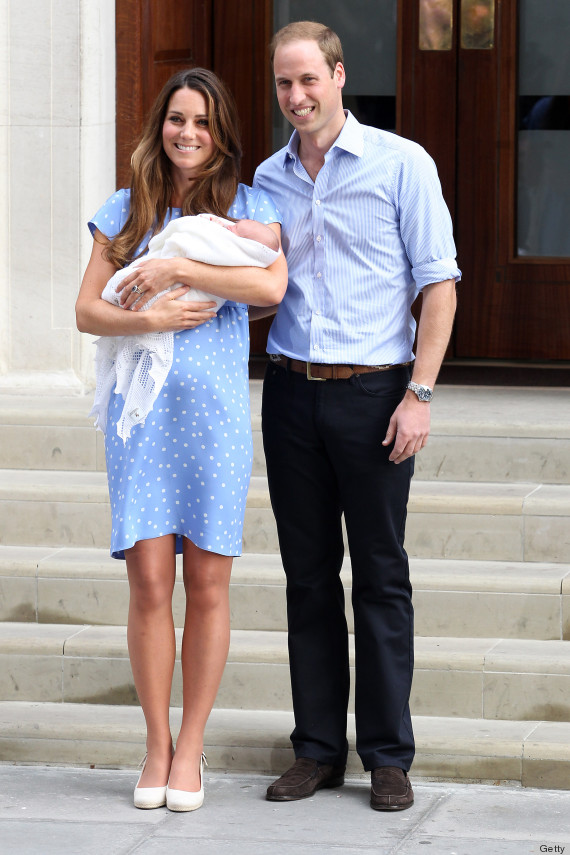
Then there’s the way they managed the whole birth business. They struck the right chord. They gave enough – the photo, the smiles. There was William’s insistence on driving his wife and son home himself – like anyone else – and the willingness to joke about the car seat jitters.  It all felt very natural and totally authentic.  And he didn’t take it too far. It all felt very true to his roots. Tradition certainly wasn’t dispensed with, no doubt to the disappointment of anyone who took a punt on the young Prince being given a contemporary name (you could get odds of 20-1 on Barack!)

We’re not talking about a radical transformation here. The fundamental role of the Royal is the same. Wills hasn’t changed what he does. He’s changed the way in which he does it and how he approaches it.

All this also acts as a nice demonstration of how just how powerful a sense of progressiveness can be. It’s done wonders for the Royal brand. And it was in a real fix. The annus horribilis really wasn’t very long ago. The Royal family felt outdated and outmoded, stale and old. And look at what’s happened now. All of a sudden, everyone wants a part of it. Everyone wants to get as close as they can to it.

And this should give heart to all those businesses and brands out there that feel like they’ve failed to move with the times, and are at risk of being redundant to the modern world. You can turn the ship around. And working to make sure you feel progressive is a great way to do it. Because people want to be connected to something that feels like it’s ready to move ahead. Something that feels like it knows where it’s going and what it wants to be. Something that will be part of the future.

# be progressive

Friday, 4 October 2013

Stella Principles

As pictures of Cara Delevinge and Miranda Kerr hitting the catwalk for Stella McCartney fill the papers, and the fashion cognoscenti fall over themselves to applaud the of-the-moment magic of the McCartney collection, it is easy to forget how negative the pundits were when she entered the fashion world a decade or two ago.

It wasn't just that they questioned her talent – though that they did – they also turned their fire on her determination to never use leather or fur in any of her products. The general consensus was that real leather was the only way you could ever properly ‘do’ accessories, that accessories are where the profit comes from, and therefore that McCartney would never be able to make any serious money.
Despite all the criticism, she didn’t change though. She had set out her principles and her point of view and she stuck to her guns.

And this makes the Stella McCartney success story – the brand posted sales of £25.8mn in 2012 up 22.8% and she designed the kit for the London Olympics – particularly interesting from our perspective.

It’s not that the world has turned against real leather in handbags, it hasn’t. There is far greater acceptance of non-leather options, partly because of what McCartney has done, but she remains the only high-end designer who makes exclusively non-leather handbags and shoes. For everyone else, leather still sells.
So it’s not the choice of issue that has helped fuel her success. We haven’t all joined PETA.
It is the approach.

It is the fact that she stuck to her principles – and creatively found a way to make really beautiful products without compromising them.

This is progressive. She’s helping create the world as she wants it to be. She’s doing what she believes in and thinks is right, not just what’s popular.

The approach also drives trust – in her, and in the brand. People are more likely to trust her to do the right thing in other areas. To make principled decisions, even if they’re not easy, and to work hard to make sure that change really happen.

The point is that people like a business which has a set of principles and a point of view – even if they don’t always agree with it on everything. They like a business that knows where it’s going and why and has a sense of purpose. And they like a business that’s willing to think hard about how to make what it believes in work for everyone else.

The sense of progressiveness that imbues the Stella McCartney brand gives its style some substance.
And it also helps explain why one of those faux leather bags that the pundits didn’t think would fly now goes for a grand.

# be progressive


Thursday, 26 September 2013

The Tesco Tablet


What to make of Tesco’s entry into the tablet market with the 119 Hudl? Particularly given that the bare economics of offering what by all accounts is a decent machine at that price point makes it clear that it’s intended to say something about the company rather than generate profit, at least in the short term. No surprise that analysts have been quick to put this into the bag as part of Tesco’s self-improvement programme.
So progressive? Or not? 

Well on first inspection it might seem like a great way for Tesco to be progressive. Not just because tablets are becoming the modern face of technology and the move demonstrates a willingness to embrace the fact that, in Phil Clarke’s own words, being online is an “increasingly essential part of family life.”


But also because it has the potential to democratise the tablet market and make something that can seem intimidating and expensive accessible to a much greater swathe of the population. 


And this is indeed all good stuff. But it doesn’t mean it will serve to make people think differently about Tesco, to make them think it is a company of the 21st Century, a company that is genuinely of its times and is contributing to its times. 


And that’s because of the way it fits with Tesco – and what people currently think about it. The Tesco tablet is cheap. So questions are already being asked about where and how it’s made and how it’s managing to squeeze this price point out of its suppliers. The tablet also feels expansionist. Doesn’t Tesco’s core retail business needs some help, before it starts becoming a consumer electronics company? And there’s a danger it looks self-serving. Loaded with Tesco content, to act as another channel for people to spend more money at the company that sold it to them. 


So we’re not so sure the Hudl makes Tesco feel genuinely progressive. Because for a company to make a move that captures the public imagination, and makes it feel like a valuable part of our future, it has to fit not just with what society needs and where it’s going, but also where the company is and what it stands for.   

It has to accentuate positives and remind everyone of just what the company or brand can – uniquely do. There can’t be anything catch-up or me-too about it. 

And by this reckoning, the Hudl doesn’t quite cut the mustard.

Friday, 30 August 2013

Good match but no match: Barclays vs football fans


A new kind of marketing is making its way into our lives, and it's hoping to win your heart.

Picture this. It’s early morning, and we see a young girl waiting outside her house for a coach to pick her up and take her to a football game.

The camera cuts to an old man, waiting in his armchair for the start of the same game.

We see the coach again, delivering the girl and fans to the stadium, and cut back to the old man – but now we’re seeing him 30 years earlier – he’s arriving at the same stadium with his son.

We watch the fans, in the past and in the present, passionately watching their team. They're on the edges of their seats, they're living the highs and lows and they're doing it with dedication and commitment - rain or shine, win or lose. Love and loyalty of fans captured in an emotional 90 ninety seconds.


This is Barclays – Barclays Premier League to be precise – celebrating the dedication of football fans in a film to mark the start of the new Premier League season. Dedication is an admirable quality but not one we usually see as the focus of such high profile brand advertising – especially when we’re talking about the dedication of the public, rather than the brand. What’s going on here?

Austerity has a jostling impact on brands – pushing them in multiple directions when it comes to communicating what they stand for.  Yes, consumers have tightened their belts and are not willing to pay over the odds for something, just because it’s framed as ‘good’. But that doesn’t meet they’ve lost their sense of values. Quite the reverse: if anything, we’ve seen consumers reprioritise their values and expectations of brands. Take a look at data released this week by the Sustainable Restaurant Association, showing how the public have reprioritised healthy, nutritious food to the top of their concerns while organic has now moved down the agenda.

Consumers know what they care about, and they expect brands to be caring about the same things.

This is fundamentally what a brand is about – a brand promises a certain standard, it reassures you that you can trust what you’re buying. A brand needs to show its commitment and its loyalty to you, the customer, and your interests – which include a responsible attitude towards society and the economy.

So the scandals that hit various banks including Barclays during the past few years have been doubly disastrous: they fuelled the decline in trust, and they did it a time when the public wanted increasingly more reassurance and commitment from brands.

Barclays’ YouTube and Twitter campaign to ‘thank fans’ for their dedication to football comes hard on the heels of a major new drive by the bank to emphasise its own dedication – to customers. Barclays is trying to align itself with positive social values and tell every stakeholder it’s doing so – from internal memos to employees, to speeches at business conferences, to films to inspire football fans.

It’s not the only brand crafting a position in the values landscape.Take Coca-Cola: recent months have seen a major drive by the company to scale up its commitment to getting people active – most recently through the Grandpa advert promoting the healthier lifestyles of the days gone by.

It’s good to see marketing teams responding to consumer sentiment and a real demand for brands to prove that they stand for something positive.

But are they proving it?

Marketing can be powerful, yes, but this new, savvy, technology-enabled, social consumer is looking for more than messages. They’re looking for proof. They’re looking for action and impact. And when I say looking, I mean expecting to see - because most of them don't want to have to go out there and find it, they want to experience, sense or come across it.

I’d like to see more social leadership programmes by our favourite brands. Programmes that use the skills, assets and brands of a business as a force for good in the world, creating both commercial and social impact. They come in all shapes and sizes, from Gucci’s landmark Chime for Change movement supporting women’s empowerment around the world, to Telefónica’s Think Big commitment to put young people at the heart of the business. In fact, Coca-Cola’s support for the Special Olympics – which is being significantly scaled up this year to create a ‘stronger brand’ for the event – is a nice example of doing it through sponsorship.

These are the kinds of activities that marketing teams can and do get excited about when it comes to communicating values. They’re designed to say something powerful about what a business stands for, what its values are, what impact it wants to have on the world. That’s when brand values mean something real to consumers – when they’re doing, not saying.


So I like the football fan film: why not celebrate the commitment of fans? Barclays and the Premier League are a good match, and getting personal with fans is an effective route to help make the most of an expensive sponsorship deal. But it'll do less in terms of halo effect for the brand's new positioning around commitment to customers. Until the brand does something powerful, inspirational and meaningful to show its own values in action, I’m left feeling that the football fan wins in the dedication game.

Monday, 29 July 2013

Wonga versus Welby

It was interesting to read the recent announcement from the Archbishop of Canterbury stating that the Church of England was going to out-compete Wonga in providing micro-loans. When I first read this story I was impressed by the Archbishop for taking an active stand. Rather than do the usual thing and bash Wonga or to wag a finger, here we have the Church of England saying that they will take them on at their own game. Archbishop Welby is said to have had a robust discussion with the Founder Errol Damelin telling him "we're not in the business of trying to legislate you out of existence; we're trying to compete you out of existence".
Can the Church make it work? Only time will tell.  

However, what is probably more telling about this story is what then followed. Having said how much he disapproved of Wonga, Archbishop Welby then had to make a rather embarrassing admission. He had to admit that £75,000 of the Church’s money was actually indirectly invested in Wonga. He said Church investment managers "didn't pick up" that they had put funds in a "pooled investment vehicle" which, through its investments, had bought into Wonga.

Admittedly this is a small fraction of its total investments of £5.5 billion. However, what it does shine a light on is not only the inter-connectedness of the financial system but also the importance of being an active investor.

The Church are probably better than most when it comes to an ethical stance on its investment portfolio and being an active investor. It has its own Ethical Investment Advisory Group which "recommends against investment" in companies which make more than 3% of their income from pornography, 10% from military products and services, or 25% from other industries such as gambling, alcohol and high interest rate lenders.
However, too often in the past it has not taken these principles to the next level by taking a stand in public about how it invests and the important of being an active investor. When we had the banking crisis taken to the door-step of the Church of England in the form of the Occupy protests at St Pauls the Church had a perfect opportunity to take a stand, but it struggled to find its position and its own voice, probably because it worried out what it had in its own portfolio.

So now it is good to see the Church taking a stand on what it believes and taking action rather than just talking. But what this situation with Wonga has shown is that this space is a difficult and complex arena in which to take a stand and to uphold your principles.    

Monday, 25 March 2013

Behaviour change campaigns can help tackle big social issues

We really like this campaign that Gillette India launched a few weeks ago - Soldier for Women. The campaign builds from the recent story of rape on a bus in India that sparked international attention about the treatment of women. Through the campaign, Gillette urges men to awaken their 'inner valour' and stand up for women in their daily lives.

Without knowing about the campaign it might seem strange for a men's razor company to create a campaign about women's rights, but Gillette's creativity has proved that the two can marry well together.

Whilst most of the attention to date has focused on the rapists and abusers of women, little has been said about the bystanders who witness the abuse of women in public. Which is why Gillette's message works so well - because it switches the attention back to the everyday man and what each of them can do to make sure these instances happen less often.

Gillette has leveraged its brand well by making this campaign about behaviour change - because with a problem as big as this, behaviour change is one of the few solutions that has the potential to impact the problem as a whole.

Tuesday, 26 February 2013

New Scope 2 reporting guidelines

The Carbon Disclosure Project issued new guidance last week, on how businesses should account for Scope 2 emissions - otherwise known as emissions from electricity. The revision recognises that, prior to this, the guidelines were in a bit of a mess when it came to the question of how to account for emissions from electricity generated from renewable sources.

Everyone felt that the blanket use of a grid average emissions factor was wrong but no one had come up with an alternative.  The good folk of the GHG Protocol had maintained a stony silence while their working group looked into the issue, Defra created a Gross and Net approach, energy suppliers had exploited the confusion to sell "green" tariffs that were anything but and businesses that had paid a premium for a renewable energy supply felt cheated that they were then not able to use it in their green house gas calculations.         

There are 2 major differences in the new guidance. 

In simple terms, businesses are now required to account for emissions from electricity using a supplier specific conversion factor (not grid average), based on the supplier’s declared fuel mix.

Furthermore, businesses can log zero emissions for each MW of electricity consumed for which they receive an acceptable tracking instrument.  These instruments are Guarantees of Origin, confirming that the electricity consumed corresponds to an equivalent amount of electricity generated from a renewable source.    

Putting to one side the fact that this will add another level of complexity to an already complicated process (one of our clients has almost 100,000 electricity meters)  its interesting to look through the facts to speculate on the potential implications -  

1. Procurement of electricity generated from renewable sources will now be seen as a valid component of a corrporate GHG reduction strategy.  Will this increase demand, price and therefore encourage investment in new supply? Clearly this is the hope from a policy perspective
  
2. Energy company tariffs will be less important than fuel mix. Will suppliers scale back green tariffs, which have had little to recommend them and aim to buy more renewable supply?     

3. EDF and British Gas could be beneficiaries.  A look at table below shows the fuel mix of major suppliers in the UK. As maybe expected, Good energy and Ecotricity top the table for lowest emissions per kWh, but with the likelihood of higher unit costs.  EDF and British Gas, on the other hand, with high proportion of nuclear in the fuel mix, are significantly better than the rest at no premium.  

Supplier
Coal
Gas
Nuclear
Renewable
CO2*


Good Energy
0.00%
0.00%
0.00%
100%
0.000 g/kWh
Ecotricity
12.10%
19.70%
2.30%
64.30%
195.5 g/kWh
EDF Energy
27.90%
5.70%
61.80%
3.90%
280 g/kWh
British Gas (Centrica)
11.40%
56.90%
22.80%
7.70%
338 g/kWh
EBICo
29%
59%
1%
10%
505 g/kWh
Scottish and Southern Energy
29%
59%
1%
10%
505 g/kWh
npower (RWE npower)
28%
60%
1%
9%
509 g/kWh
Utility Warehouse
28%
60%
1%
9%
509 g/kWh
E.ON Energy
34.30%
47%
5%
10.20%
543 g/kWh
ScottishPower
48.90%
43.40%
0.00%
7.60%
620 g/kWh


UK average
28.90%
44.20%
17.30%
7.90%
450 g/kWh

Source - Uswitch 


Friday, 15 February 2013

Everyday Value, Occasional Values


We all want to believe that we're doing the right thing. We buy fair trade chocolate, we frequent independent shops, we cycle to work, we feed the birds.   But in vast swathes of our daily lives as consumers there is very little to point us in the right direction and we rely on trust.  We trust retailers to do the digging for us, to know that the factory isn't using forced labour, to be sensible with hazardous waste, to know what they're selling and to be honest about it.  In doing so we enter into a compact - we'll go quietly if you don't diddle us. 

The horse meat issue is a harsh reminder that, for some retailers, that contract is flexible. That in the in the pursuit of profit they are willing to abuse the trust of consumers.

So, as consumers, what do we do? Maybe its time we we went a little less quietly and took a little more responsibility for finding out. Perhaps not to this extent but it never hurts to ask.   


Tuesday, 29 January 2013

The United Faces of Benetton

United Colors of Benetton has always challenged status quo in it's advertising. From its controversial ads in the 1990s to its more recent UNHATE campaigns, it has always seeked to challenge existing paradigms and 'fight against hate and discrimination in all its forms'.

It's most recent activity is a global advert campaign featuring 9 models it believes to be trendsetters. These include disabled model Maio Galla, who caused a stir during Berlin Fashion Week in 2012 when he wore shorts that revealed his artificial leg, trans-sexual super model Lea T,  and Charlotte Free, a Californian model made famous because of her pink hair. Whilst the print ads look normal at a glance, they have created 'getting to know' videos where each of the models explains where they came from and what colour means to them. It is also hoping to build an online community dedicated entirely to colour which will engage user-generated feeds from online channels and it will also sell limited edition t-shirts with the proceeds from these sales going to the UNHATE Foundation.

Whilst in the past Benetton's actions were seen as more shocking than socially motivated, this campaign shows that Benetton is really think about the social purpose of its company. It ticks all the boxes by choosing models from across the globe who represent different things, through supporting it with online activity, and by generating money for the cause through selling T-shirts. All in all - Well done Benetton!


Friday, 25 January 2013

Get a Purpose and Get Real

Great new blog from our girl Harriet Henry in Boston, exploring the differences in approach to business responsibility between Europe and the US.

Harriet’s latest post takes a look at the growing momentum (on both sides of the pond) behind the idea of a business’s ‘Purpose’.  In many ways, this is yet another good sign that companies are looking beyond the silos of ‘corporate social responsibility’ to explore what a business itself stands for. What’s it achieving? Why are we all better off that it exists? Why should I buy its stuff rather than another brand?

Purpose needs to reflect substance and action. Back over here in the UK, we heard last week that Barclay’s boss Antony Jenkins has announced a new ‘purpose and values’ blueprint for the company. He sent a message out to all staff to say that if they’re not on-board with the new ethical approach to how they do business, then they’re not welcome at Barclay’s anymore.

It certainly grabbed some headlines.  And to be fair, this is a (small) step in the right direction for rebuilding standards of the UK’s financial services. But surely Barclay’s bosses, like the media, must be aware that the new ‘purpose and values’ will only affect the company’s risk profile and its reputation if they’re accompanied by a hard-nosed plan to make them a reality – to actually create cultural change from within.

As Harriet says – Purpose can help a company’s people unite behind a cause, behind a bigger meaning of why they all turn up for work in the morning.  As the stock markets continue to rally this week after five years of uncertainty and learning hard lessons of business ethics, let’s see whether this growing commitment to corporate Purpose manages to translate itself into real change.

Thursday, 10 January 2013

How many slaves work for you?

The word ‘slave’ provokes a response. It’s aggressive, it’s nasty, it’s taboo. Slavery Footprint says there are at least 27 million slaves working in the world today, and their website – SlaveryFootprint.org – uses a simple but very engaging mechanism to help consumers calculate the answer to the provocative question 'how many slaves work for me?'.

Millions have used it, and tomorrow – National Human Trafficking Awareness Day – Slavery Footprint is going to make a lot of noise, as hundreds of thousands take part in a social media flashmob to raise awareness of how we’re all supporting slavery through the everyday goods we buy.

And because we all know people respond to visual cues, the chain is everywhere. Not the traditional iron type that tugged at the ankles of slaves; this time it’s a corporate supply chain: slave, raw materials, manufacturer, brand, consumer.

“Everyone says they would have fought against slavery 150 years ago. Now’s your chance” we're told. “Today, you still have slaves working for you but they’re hidden deep within the supply chains of the products you love. In Uzbekistan, forced laborers harvest the cotton for your t-shirt, boys in the Congo mine the raw materials for your cell phone, and children in Ghana are enslaved on fishing boats and forced to catch a seafood supper.”

This campaign is one to watch. Not only is it symbolic of the increasingly effective tactics and tools that campaigning organisations are using to generate support, they’ve also adopted a very interesting strategy to provoke (force? inspire?) corporate change.

They primarily target the consumer. Not the company. Not the brand. Not the manufacturer. The person who's buying the products, unwittingly supporting slavery.

Slavery Footprint say that ignorance of slavery is what keeps it alive. They realise that a campaigning organisation is far more likely to get heard if a million voices are shouting at a business for change, rather than just one, and they think the consumers would shout if they knew.

The social reach of tomorrow’s thunderclap currently stands at 177,300. Tomorrow's social media extravaganza will take place in a largely indiscriminate direction, shouting loudly but not embarrassing any specific big brand. Give it a year though, and I wouldn’t be surprised if that army of passionate, volunteer campaigners was putting pressure on specific companies that haven’t sorted out their supply chains.

If you're in business and interested in the solutions, take a look at Made in a Free World for ideas - or talk to us!


Wednesday, 2 January 2013

Sponsoring sport - the golden goal?

Coca-Cola’s sponsorship of last year’s Olympic Games was a real landmark.

At a time when society is increasingly expecting businesses to demonstrate that they play a positive, responsible role in the world, sponsorship is the ideal moment to do something really impressive and really public, and get the rewards that leadership deserves. 

At London 2012 Coca-Cola did some impressively positive things, judging by any standards. Whether it’s the fact that 73% of drinks consumed at the Games were Coca-Cola’s water, juice or no/low-calorie brands; the fact that 100% of bottles were recyclable and the £15million invested into a new UK recycling plant to handle them; the 1000 young people given the chance to carry the torch as a Future Flame for their community; the investment in the Special Olympics to create sporting opportunities for people with intellectual disabilities; or the hundreds of environmental pledges made by athletes at the in-park sustainability hub created by Coca-Cola (I could go on – read more here), this was a wide-ranging, innovative and really committed demonstration of a company doing the right thing, in a relevant way at the right moment.

WWF-UK CEO David Nussbaum sees it as a new benchmark that other sponsors will be expected to reach,
The work Coca-Cola has undertaken to reduce its impact at the Games, and the lengths to which it has gone to use the power of its brand to engage others and ensure its actions have a lasting impact is to be commended and sets a standard for future corporate sponsors of international events”.

We worked with Coca-Cola to produce London 2012: Our Sustainability Legacy, detailing how the company achieved their most sustainable sponsorship to date in order to inspire and guide others wanting to deliver a truly sustainable event of their own. It provides new best practice models, including one for measuring and managing carbon impacts; another for an innovative, efficient waste recycling system for large events. Last week the final piece of the jigsaw was added when Demos published the results of their review to quantify the social impact of Coca-Cola’s London 2012 sponsorship – see the headlines here.

Models are one thing – there are three in the links above to get you started if you’re responsible for (or sponsor of) a big event.  But they’re not enough. It’s putting it into practice that matters for the brand and for us all. Coca-Cola did it at London 2012. 2013 brings the World Athletics Championship, the African Cup of Nations, the Rugby League World Cup, the Australian Open, as well as the conclusion to the Champions League, Wimbledon and all the other annual sporting highlights. Which of the many corporate sponsors will step up and take gold? It requires commitment and investment but there’s a big prize on offer.

Friday, 7 December 2012

Being a good brand is the new brand

“People trust companies less and less. They do not believe companies, they do not believe CEOs, they do not believe advertisers”. So opens the trailer for a new documentary on the revolution in the advertising world: The Naked Brand.


The Naked Brand explains how the 21st century explosion in the use of social media is making brands more transparent – whether they like it or not. Today, consumers can easily look, search and find the reality of what the company behind the brand stands for. The film documents how an increasing number of brands are responding to this, recognising that these days they can’t just say they’re great, they have to actually be great. 

The film comes hard on the heels of new research from the UK, the US, Germany, China, India and Brazil, which found that two thirds of consumers say they feel “a sense of responsibility to purchase products that are good for the environment and society”.

I haven’t yet watched the full length film but it certainly looks like it’s setting out in the right direction. Especially encouraging is the director’s emphasis that it’s about doing good business because it’s the business-savvy thing to do, not because it’s a 'nice' thing to do. This is about sustainable business in its original sense – managing a company for the long-term.

But I’m less sure about the film’s target audience. Created by an ad agency, it looks like it heavily features and focuses on the role of marketing. Although I agree that it’s absolutely essential that brand and marketing teams are informed, supportive and activating around a brand’s values, this can only be done when the business has ensured it genuinely is standing for those values. You have to walk the talk before you start talking. Over the years, far too many brands have tripped up. The reputational crises that result have been widely reported, not least by us in Value with Values.

If this film triggers businesses to improve how they do business and then communicate it more effectively to consumers – great. But if it simply makes marketing teams think they’ve found an easy win without understanding how to do it properly, oh dear. We’ll be watching.


From Director Jeff Rosenblum (courtesy of Sustainable Brands):

“The big lesson is that social media makes brands completely transparent. They’re essentially naked. What that means is, if a corporation creates a crappy product — if they behave unethically — no advertising message can cover that up. Brands are spending a ton of time figuring out how they can create great content and ads for social media, but what they should be saying is, instead of facing outward, let’s turn our focus inward — let’s focus on our own behavior. When we establish excellent corporate behavior, people will carry that message on social media platforms much more effectively than we ever could with a paid advertisement. What we don’t want the film to be is a ‘green’ story — ‘be sustainable because it’s good for the environment.’ The story we want to tell is, when you start moving the planet forward, you as a corporation can make more money. And that doesn’t sound as nice as ‘you should behave better because it’s the right thing to do,’ but I think it’s more of a sustainable business practice.”

Friday, 30 November 2012

Not all crowds are mad

‘Extraordinary Popular Delusions & the Madness of Crowds’, first published in 1841, doesn’t paint a very flattering picture of crowds. It’s one of the most influential (and insightful) reviews of the irrational and rather stupid things that people do when swept up in speculative fever.

No doubt crowds still do very silly things (Mackay’s book is cited by some as the best ever written about market psychology). But recent decades have seen a more favourable view of the ‘knowledge of the crowd’ emerge – and recent years have seen that idea taken up in a big way by big business.

Companies are clamouring to hear your ideas – Which of these do you like best? What can we do to make your life easier? Help us design a new product!  Of course, not all are simply mining the public for information to help sales with no wider benefits; many see crowdsourcing as a way to do some good for the world and for the bottom line.

GE’s Ecomagination is perhaps one of the best established and best loved – a forum for imagination and innovation to create sustainable solutions to today’s environmental challenges, with the incentive that GE might just make your idea reality.

Ecomagination is huge. At the other end of the scale (but growing fast) are companies like Threadless – a T-shirt manufacturer that asks its online community of over a million members (growing by 20,000 each month) to vote for their favourite T-shift design out the 1000 that members posted that week. With minimal waste, 200% annual growth and revenues of over $30m, Threadless is demonstrating that a crowdsourced, on-demand model is good for the bottom line and its environmental footprint.

New crowdsourcing initiatives have flowed this year. We’ve had Heineken launching its IdeasBrewery, Tetra Pak’s second-phase renewable idea, Sainsbury’s asking for help to engage consumers in its ‘Love your Leftovers’ and ‘Million Meals’ campaigns, and Unilever’s Sustainable Living Lab, to name but a few. There are also closed communities sharing ideas - we helped Orange set up one of innovators, NGOs and tech experts to help us develop the detail behind the DoSomeGood app.

What’s driving this explosion in co-creation? Writing in the Guardian, Phil Drew offers some interesting analysis, highlighting crowdsourcing as a way to build new partnerships, to engage those causing the problem (consumers) as part of the solution, and as a new way to manage brand reputation: boosting opinions of a company by enabling consumers to shape its future.

But I think the crowdsource revolution is also a natural response to an age of social media. Corporate communications aren’t one-way any more. You’re part of a big conversation, whether you like it all not, and that has real implications for how you communicate what you as a business are all about. Yes, that opens up questions about reputational risk (what do you say? How do you say it? Who says it? What happens when something goes wrong?) but it’s also about opportunity. A rosy opportunity to show that your brand stands for something good, and it wants its fans to help it do it. While the internet is with us, co-creation will grow. Welcome to the world of crowdsourcing for good.

Measuring consumer perceptions, and what businesses can learn from it


Whilst we've always known that bad behaviour can effect consumer attitudes, it's still interesting to see just how much. And even more so when they can be measured so accurately by new technologies and tools.

Last month it emerged that Starbucks paid no corporation tax in the UK over the past year, despite making sales of almost £400 million. When exposed, it was met with public outrage, with newspapers condemning the behaviour, governments calling them to question and interest groups planning large protests. Whilst these groups have always shouted the loudest, it's perhaps more interesting to see how the alleged tax avoidance fared  in the eyes of the common consumer.

Research from social media agency, Yomego, & research company, YouGov, was able to shed some light on this matter. Yomego found that the popularity of Starbucks fell drastically from October to November, with 95% of comments on social media containing references to the tax issue. And YouGov's BrandIndex showed similar results. Buzz, which looks at whether people are hearing positive or negative news about the brand, found that (Starbucks’) scores dropped from 0 to -25 in October, and brand perception scores were also shown to fall from +1 to -11. The data therefore presents a picture of a consumer group that also cares about, and actively condones, this sort of behaviour.

As we see more stories like this appear, with measurement tools clearly showing the effect on brands, it’s only a matter of time before we see businesses realise the importance of meeting society’s expectations as key to successful enterprise.

Friday, 16 November 2012

Be innovative with your assets

It's great to see more companies thinking innovatively about what responsibility means. For businesses, responsibility is all about recognising the opportunity in business assets - to be a powerful tool to better the world and spread positive messages.

This week we see Coca-Cola showing it understands what this means, as it has replaced its corporate website with a dynamic digital magazine that showcases universally important topics, social causes and company news.

After realising that its corporate website was its most trafficked property, Coca-Cola chose to think differently about what it did with it. It recognised the responsibility associated with being a media owner, and saw an opportunity to leverage the website to engage and educate its visitors.

Coca-Cola's approach is something other businesses can really learn from. With some creative insight and thought, there are ways in which even the most unlikely of assets can be turned into a tool to drive social and commercial value.

Wednesday, 31 October 2012

Choose your friends wisely

I’m increasingly feeling that 2012 will be seen as the year that the supply chain took new dominance in the world of corporate reputations. 

Back in the day, 'corporate social responsibility' was all about showing that your business could do the cuddly stuff – that you had a heart, that you supported good causes, that you cared. Things moved on in many different directions, with many forward-thinking companies realising that they had to show that the way in which they did business itself was good.

But these days that’s not enough. Our newspapers offer enough scandal triggered by businesses' supply chain partners to give a Halloween fright to any corporate responsibility manager. We’ve got news of further rioting at Foxconn’s factories, no doubt deepening the headache for Apple about knock-on effects on its reputation; we’ve got BP’s never-ending deep water horizon battle, with executives still insisting “it wasn’t our fault!”, pointing in the direction of Transocean and others; while Sainsbury’s has been put in the ‘hall of shame’ over its treatment of suppliers.

It’s not just supply chain slip-ups that are repositioning the debate about what influences the ethical reputation of our biggest brands. This week’s Ethical Performance reports several stories involving multinationals publicly supporting 'pro-social' legislation whilst associated trade groups lobby for its downfall behind the scenes. So it’s not just what you do, and it’s not just what your suppliers do or you do to them, it’s also what your partners and associates do that’s in the spotlight.

Of course, I’m not suggesting that damaging supply chain and partner scandals are new. Nike and Gap’s sweatshop scandals in the ‘90s are a case in point that big brands have long been subject to such scrutiny. But I do think we’re seeing a more systematic assessment of what’s going on behind the scenes of big corporates – driven partly by the work of NGOs such as War on Want, Greenpeace and Global Witness, partly by investigative journalists and curious academics, and partly by an increasingly active and by-no-means homogenous ‘consumer’, empowered by rich data and networks offered by the internet and social media.

Thursday, 18 October 2012

Can banks learn something from cycling's Team Sky?


There were always suspicions about Lance Armstrong and his use of doping, but the recent release of the United States Anti-Doping Agency’s report on doping in the sport has been nothing short of ground breaking. The scale, complexity and endemic nature of doping in cycling is quite remarkable.


But what has surprised me most, following the release of the USADA's report, has been the silence of the cycling teams. Until today not one of the cycling teams (many of which must have known something about the doping that was going on in the profession, if not in their own team) had come out publicly to say what their role was in this shocking situation or what they will do differently to clean up the sport.

Today, finally, a team put its head above the parapet and made a statement about what it was going to do differently. Team Sky has committed to making all its riders and management declare that they have never doped.

"We will ask everyone to sign up to a written policy, confirming that they have no past or present involvement in doping," said Team Sky. "Should anyone choose not to sign up, they will have to leave the team."

Making a clear statement like this and wearing your values on your sleeve is something that takes courage. What Team Sky will do if it finds any doping within its own team will allow us to see how serious it is. However, it’s commitments like this, and hopefully the actions that support it, that will play a key role in cleaning up the sport.

Interestingly I feel there is something of an analogy to be drawn between cycling’s predicament and what we are seeing in the banking sector. Here we have a sector that for too long has been riddled with cheating and manipulation (just look at the recent scandals on PPI and Libor, or back to the sub-prime mortgages) very much like the world of cycling. But those teams (banks), much like most of the cycling teams, that have been implicit in the corruption have yet to stand up and say what they’re going to do differently.

Sure we have seen a few CEOs (not many) come out and say how sorry they are and how what has been perpetrated by the banking sector has been unacceptable. But what has actually changed. Most are waiting for regulation to force any changes. We have the Vickers Report that, according to the Conservatives, will be implemented in full. But today we read that Paul Volker (the former chief of the US Federal Reserve and architect of the Volcker rule on America's regulatory reforms of banks) believes Britain is running the risk of bankers chipping away at the recommended reforms until they are rendered useless. The banks and their lobbyists are determined to see no change.

This all means we have yet to see any of the big banks put its head above the parapet and make a genuine statement about what it stands for and what it will do differently as a result of all the recent scandals.

As with the cycling world, if banks really want to regain the trust of consumers they need to take leadership. They need to demonstrate how things have changed and how they are genuinely committed to doing things differently.

And there in lies an opportunity for differentiation in the banking sector.

We need to see a Team Sky in the banking world making a statement about how what has been going on is unacceptable. And then we need to see that team (bank) show what it is going to do differently. It may seem simplistic but could Team Sky have the seed of a first step that a bank (or the sector) could do – introduce a code or ethical standard (similar to the Hippocratic Oath signed by doctors) for all banking employees.

It’s not a new idea, but perhaps it’s one that can start to help rebuild trust in the banking sector.