Friday, 30 November 2012

Not all crowds are mad

‘Extraordinary Popular Delusions & the Madness of Crowds’, first published in 1841, doesn’t paint a very flattering picture of crowds. It’s one of the most influential (and insightful) reviews of the irrational and rather stupid things that people do when swept up in speculative fever.

No doubt crowds still do very silly things (Mackay’s book is cited by some as the best ever written about market psychology). But recent decades have seen a more favourable view of the ‘knowledge of the crowd’ emerge – and recent years have seen that idea taken up in a big way by big business.

Companies are clamouring to hear your ideas – Which of these do you like best? What can we do to make your life easier? Help us design a new product!  Of course, not all are simply mining the public for information to help sales with no wider benefits; many see crowdsourcing as a way to do some good for the world and for the bottom line.

GE’s Ecomagination is perhaps one of the best established and best loved – a forum for imagination and innovation to create sustainable solutions to today’s environmental challenges, with the incentive that GE might just make your idea reality.

Ecomagination is huge. At the other end of the scale (but growing fast) are companies like Threadless – a T-shirt manufacturer that asks its online community of over a million members (growing by 20,000 each month) to vote for their favourite T-shift design out the 1000 that members posted that week. With minimal waste, 200% annual growth and revenues of over $30m, Threadless is demonstrating that a crowdsourced, on-demand model is good for the bottom line and its environmental footprint.

New crowdsourcing initiatives have flowed this year. We’ve had Heineken launching its IdeasBrewery, Tetra Pak’s second-phase renewable idea, Sainsbury’s asking for help to engage consumers in its ‘Love your Leftovers’ and ‘Million Meals’ campaigns, and Unilever’s Sustainable Living Lab, to name but a few. There are also closed communities sharing ideas - we helped Orange set up one of innovators, NGOs and tech experts to help us develop the detail behind the DoSomeGood app.

What’s driving this explosion in co-creation? Writing in the Guardian, Phil Drew offers some interesting analysis, highlighting crowdsourcing as a way to build new partnerships, to engage those causing the problem (consumers) as part of the solution, and as a new way to manage brand reputation: boosting opinions of a company by enabling consumers to shape its future.

But I think the crowdsource revolution is also a natural response to an age of social media. Corporate communications aren’t one-way any more. You’re part of a big conversation, whether you like it all not, and that has real implications for how you communicate what you as a business are all about. Yes, that opens up questions about reputational risk (what do you say? How do you say it? Who says it? What happens when something goes wrong?) but it’s also about opportunity. A rosy opportunity to show that your brand stands for something good, and it wants its fans to help it do it. While the internet is with us, co-creation will grow. Welcome to the world of crowdsourcing for good.

Measuring consumer perceptions, and what businesses can learn from it


Whilst we've always known that bad behaviour can effect consumer attitudes, it's still interesting to see just how much. And even more so when they can be measured so accurately by new technologies and tools.

Last month it emerged that Starbucks paid no corporation tax in the UK over the past year, despite making sales of almost £400 million. When exposed, it was met with public outrage, with newspapers condemning the behaviour, governments calling them to question and interest groups planning large protests. Whilst these groups have always shouted the loudest, it's perhaps more interesting to see how the alleged tax avoidance fared  in the eyes of the common consumer.

Research from social media agency, Yomego, & research company, YouGov, was able to shed some light on this matter. Yomego found that the popularity of Starbucks fell drastically from October to November, with 95% of comments on social media containing references to the tax issue. And YouGov's BrandIndex showed similar results. Buzz, which looks at whether people are hearing positive or negative news about the brand, found that (Starbucks’) scores dropped from 0 to -25 in October, and brand perception scores were also shown to fall from +1 to -11. The data therefore presents a picture of a consumer group that also cares about, and actively condones, this sort of behaviour.

As we see more stories like this appear, with measurement tools clearly showing the effect on brands, it’s only a matter of time before we see businesses realise the importance of meeting society’s expectations as key to successful enterprise.

Friday, 16 November 2012

Be innovative with your assets

It's great to see more companies thinking innovatively about what responsibility means. For businesses, responsibility is all about recognising the opportunity in business assets - to be a powerful tool to better the world and spread positive messages.

This week we see Coca-Cola showing it understands what this means, as it has replaced its corporate website with a dynamic digital magazine that showcases universally important topics, social causes and company news.

After realising that its corporate website was its most trafficked property, Coca-Cola chose to think differently about what it did with it. It recognised the responsibility associated with being a media owner, and saw an opportunity to leverage the website to engage and educate its visitors.

Coca-Cola's approach is something other businesses can really learn from. With some creative insight and thought, there are ways in which even the most unlikely of assets can be turned into a tool to drive social and commercial value.

Wednesday, 31 October 2012

Choose your friends wisely

I’m increasingly feeling that 2012 will be seen as the year that the supply chain took new dominance in the world of corporate reputations. 

Back in the day, 'corporate social responsibility' was all about showing that your business could do the cuddly stuff – that you had a heart, that you supported good causes, that you cared. Things moved on in many different directions, with many forward-thinking companies realising that they had to show that the way in which they did business itself was good.

But these days that’s not enough. Our newspapers offer enough scandal triggered by businesses' supply chain partners to give a Halloween fright to any corporate responsibility manager. We’ve got news of further rioting at Foxconn’s factories, no doubt deepening the headache for Apple about knock-on effects on its reputation; we’ve got BP’s never-ending deep water horizon battle, with executives still insisting “it wasn’t our fault!”, pointing in the direction of Transocean and others; while Sainsbury’s has been put in the ‘hall of shame’ over its treatment of suppliers.

It’s not just supply chain slip-ups that are repositioning the debate about what influences the ethical reputation of our biggest brands. This week’s Ethical Performance reports several stories involving multinationals publicly supporting 'pro-social' legislation whilst associated trade groups lobby for its downfall behind the scenes. So it’s not just what you do, and it’s not just what your suppliers do or you do to them, it’s also what your partners and associates do that’s in the spotlight.

Of course, I’m not suggesting that damaging supply chain and partner scandals are new. Nike and Gap’s sweatshop scandals in the ‘90s are a case in point that big brands have long been subject to such scrutiny. But I do think we’re seeing a more systematic assessment of what’s going on behind the scenes of big corporates – driven partly by the work of NGOs such as War on Want, Greenpeace and Global Witness, partly by investigative journalists and curious academics, and partly by an increasingly active and by-no-means homogenous ‘consumer’, empowered by rich data and networks offered by the internet and social media.

Thursday, 18 October 2012

Can banks learn something from cycling's Team Sky?


There were always suspicions about Lance Armstrong and his use of doping, but the recent release of the United States Anti-Doping Agency’s report on doping in the sport has been nothing short of ground breaking. The scale, complexity and endemic nature of doping in cycling is quite remarkable.


But what has surprised me most, following the release of the USADA's report, has been the silence of the cycling teams. Until today not one of the cycling teams (many of which must have known something about the doping that was going on in the profession, if not in their own team) had come out publicly to say what their role was in this shocking situation or what they will do differently to clean up the sport.

Today, finally, a team put its head above the parapet and made a statement about what it was going to do differently. Team Sky has committed to making all its riders and management declare that they have never doped.

"We will ask everyone to sign up to a written policy, confirming that they have no past or present involvement in doping," said Team Sky. "Should anyone choose not to sign up, they will have to leave the team."

Making a clear statement like this and wearing your values on your sleeve is something that takes courage. What Team Sky will do if it finds any doping within its own team will allow us to see how serious it is. However, it’s commitments like this, and hopefully the actions that support it, that will play a key role in cleaning up the sport.

Interestingly I feel there is something of an analogy to be drawn between cycling’s predicament and what we are seeing in the banking sector. Here we have a sector that for too long has been riddled with cheating and manipulation (just look at the recent scandals on PPI and Libor, or back to the sub-prime mortgages) very much like the world of cycling. But those teams (banks), much like most of the cycling teams, that have been implicit in the corruption have yet to stand up and say what they’re going to do differently.

Sure we have seen a few CEOs (not many) come out and say how sorry they are and how what has been perpetrated by the banking sector has been unacceptable. But what has actually changed. Most are waiting for regulation to force any changes. We have the Vickers Report that, according to the Conservatives, will be implemented in full. But today we read that Paul Volker (the former chief of the US Federal Reserve and architect of the Volcker rule on America's regulatory reforms of banks) believes Britain is running the risk of bankers chipping away at the recommended reforms until they are rendered useless. The banks and their lobbyists are determined to see no change.

This all means we have yet to see any of the big banks put its head above the parapet and make a genuine statement about what it stands for and what it will do differently as a result of all the recent scandals.

As with the cycling world, if banks really want to regain the trust of consumers they need to take leadership. They need to demonstrate how things have changed and how they are genuinely committed to doing things differently.

And there in lies an opportunity for differentiation in the banking sector.

We need to see a Team Sky in the banking world making a statement about how what has been going on is unacceptable. And then we need to see that team (bank) show what it is going to do differently. It may seem simplistic but could Team Sky have the seed of a first step that a bank (or the sector) could do – introduce a code or ethical standard (similar to the Hippocratic Oath signed by doctors) for all banking employees.

It’s not a new idea, but perhaps it’s one that can start to help rebuild trust in the banking sector.

Wednesday, 3 October 2012

The Rise and Rise of Ethical Banking


There is frequently lots of talk around consumers saying they want businesses to be more ethical but when it comes to the crunch, do little to act on it.

It was therefore interesting to see stats published last month showing that the Co-op Bank has witnessed a 97% increase in customers requesting to switch to their current accounts in 2012.  And the mutually owned Nationwide also reported a huge 85% increase in new account enquiries -  signalling a shift in previously inactive consumer behaviour.

Louis Brooke from the Move Your Money Campaign says “Since January we estimate that half a million people have switched their current accounts to ethical alternatives” marking what appears to be a consumer movement towards ethical banking.

Moving to ethical finance is one of the ways a consumer’s choice can have the biggest positive impact with finance being so closely tied to all other elements of the economy. The Independent columnist, Simon Birch, predicts that this current revolution could well prove to be a significant moment for the wider ethical consumer movement.

Perhaps this will be the first wave of consumers really putting their money where their mouth is.


Friday, 3 August 2012

Spoofs - the art of calling businesses to action


There's a recent trend on social media to make spoofs of businesses adverts. Most recently Shell has fallen victim to these spoofs with its Let's Go campaign. It began as a way for Shell to communicate its expansion into alternative energy sources but after environmental activists got their hands on it it ended as a caption contest to highlight their investments in non-renewable resources. Almost 10,000 images were created which added different tag lines to Shell's original print adverts and these new posters were shared across social media channels.


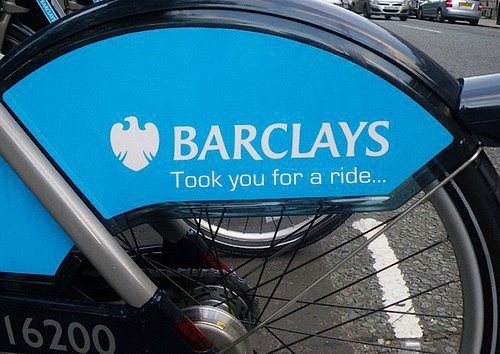
We've also seen similar spoofs on Barclay's bikes after the recent rate-fixing stories and on Nestle and Unilever adverts following concerns about palm oil. You've got to admire the creativity of these activists and it  presents an important new concern for businesses.


Since Nike's experiences over a decade ago, businesses have always feared customers will boycott their products but this is a new bigger concern. Getting people to stop buying products or organising protests is difficult, and people are unlikely to share those messages. Spoofs on the other hand are funny, intelligent and simple, and as social media users are always looks for things to share they're an incredibly easy way to spread the message. For a business this could spell disaster. It's easy to ignore a few customers that stop buying products, but it's much more difficult to ignore a social media storm. After all, considering the 1:9:99 rule of social media, for every picture created, 9 others will comment on it and 99 others will see it. And whilst a businesses might spend hundreds of thousands on getting a positive message across to consumers, a clever negative message could be spread at practically no cost at all. It seems social media really is shifting the power balance and we may see more 'good' businesses as a result.